
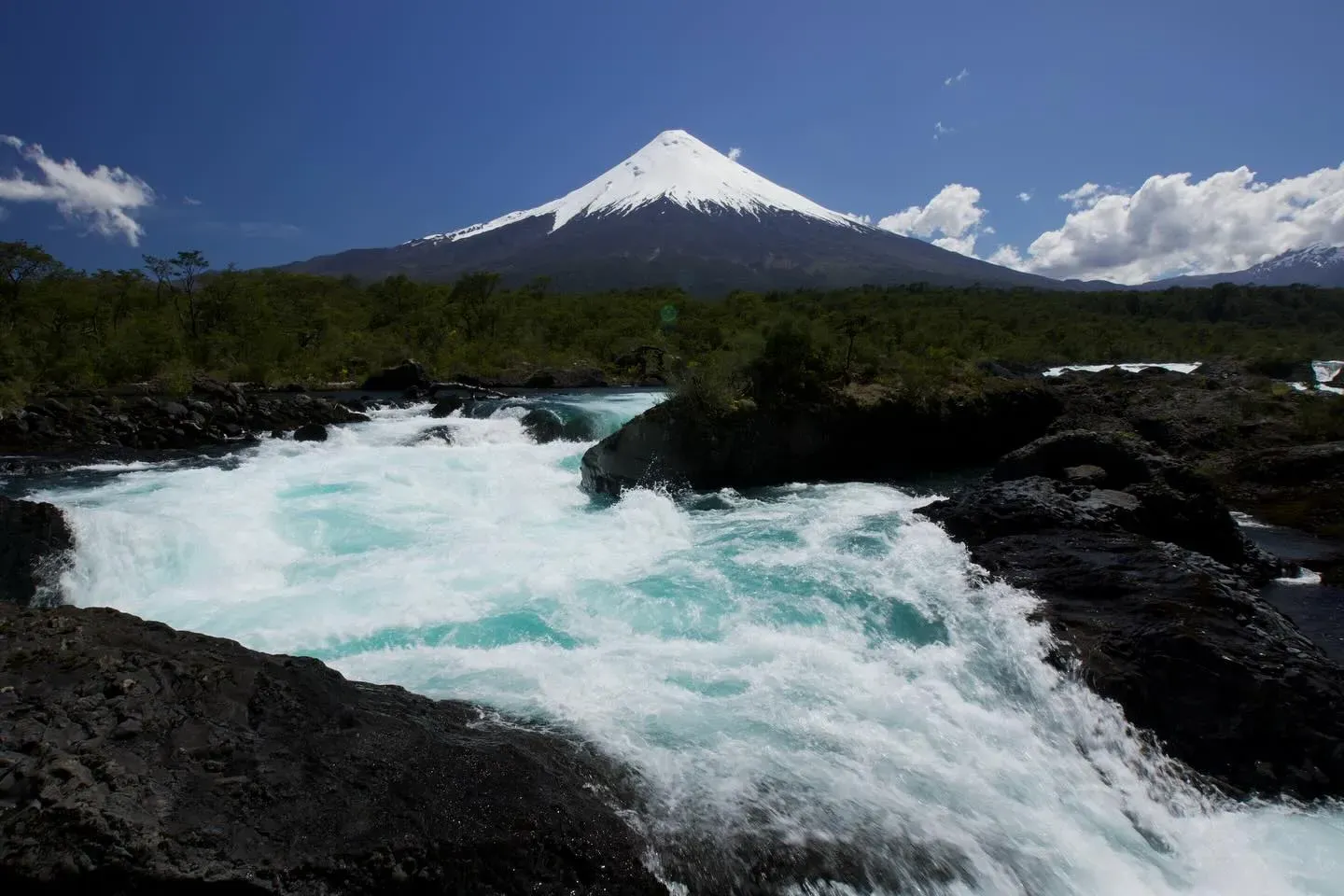
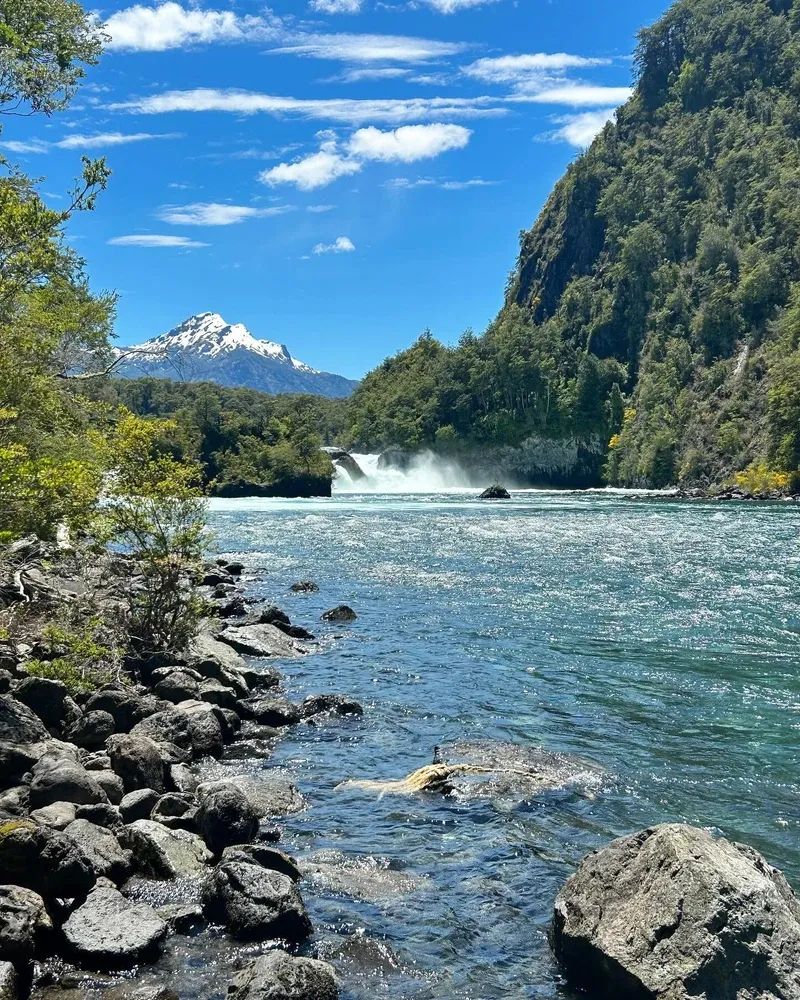
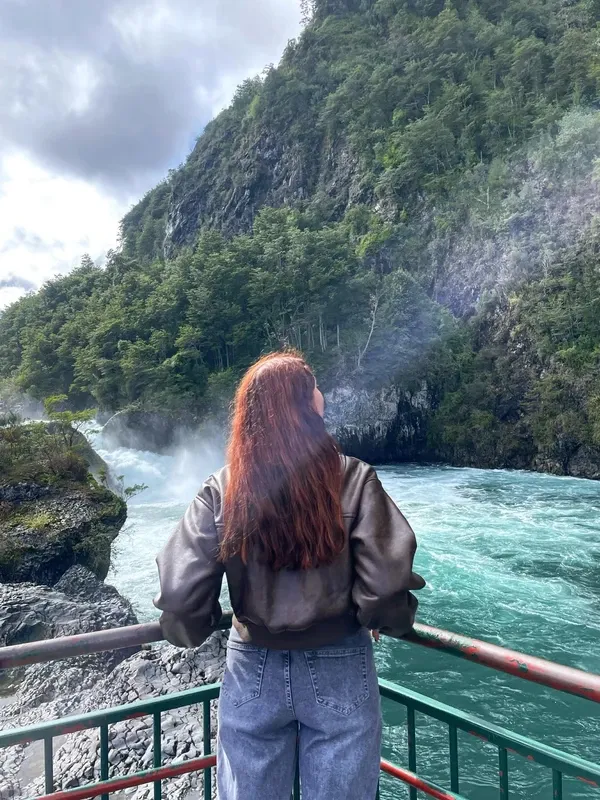
Watch 270 cubic meters of striking turquoise water surge through narrow channels of dark basaltic lava rock every second. Set within Chile's oldest national park, these powerful chutes flow directly beneath the 2,652-meter snow-capped cone of the Osorno Volcano.
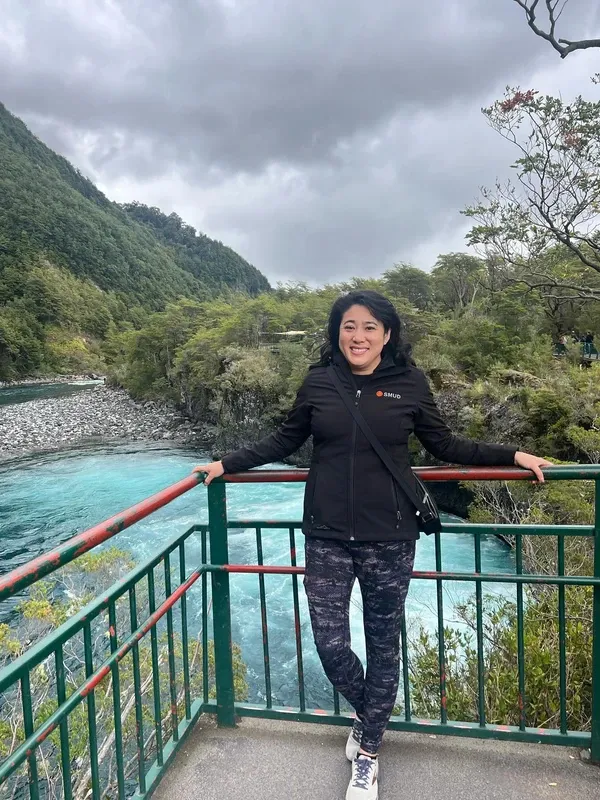
Find Guided ToursPetrohué Waterfalls (Saltos del Petrohué) is a series of chute-type waterfalls located on the Petrohué River in southern Chile. Situated at an elevation of 190 meters, the site sits approximately six kilometers downstream from the river's source at Lake Todos los Santos. The falls are known for their striking turquoise water surging through narrow channels of dark volcanic rock. The snow-capped cone of the Osorno Volcano and dense Valdivian temperate rainforest frame the landscape.
The power of the Petrohué River is substantial. The average water flow reaches 270 cubic meters per second. During the rainy season, this volume can increase significantly as the water level of Lake Todos los Santos rises by up to three meters.
The unique geological formations at the falls date back thousands of years. Eruptions from the 2,652-meter-high Osorno Volcano deposited basaltic lava, known as andesite, across the area to form the current riverbed. Over centuries, the abrasive sand and silt carried by the fast-moving river carved and polished these dark rocks. This continuous water action created the distinctively smooth, sculptural appearance visible today.
The waterfalls serve as the centerpiece of Vicente Pérez Rosales National Park. Established on August 17, 1926, this 2,530-square-kilometer protected area holds the distinction of being the first national park in Chile. The site remains one of the most photographed and visited natural landmarks in the country's Lake District.
Discover the full history and cultural significance on our About page.
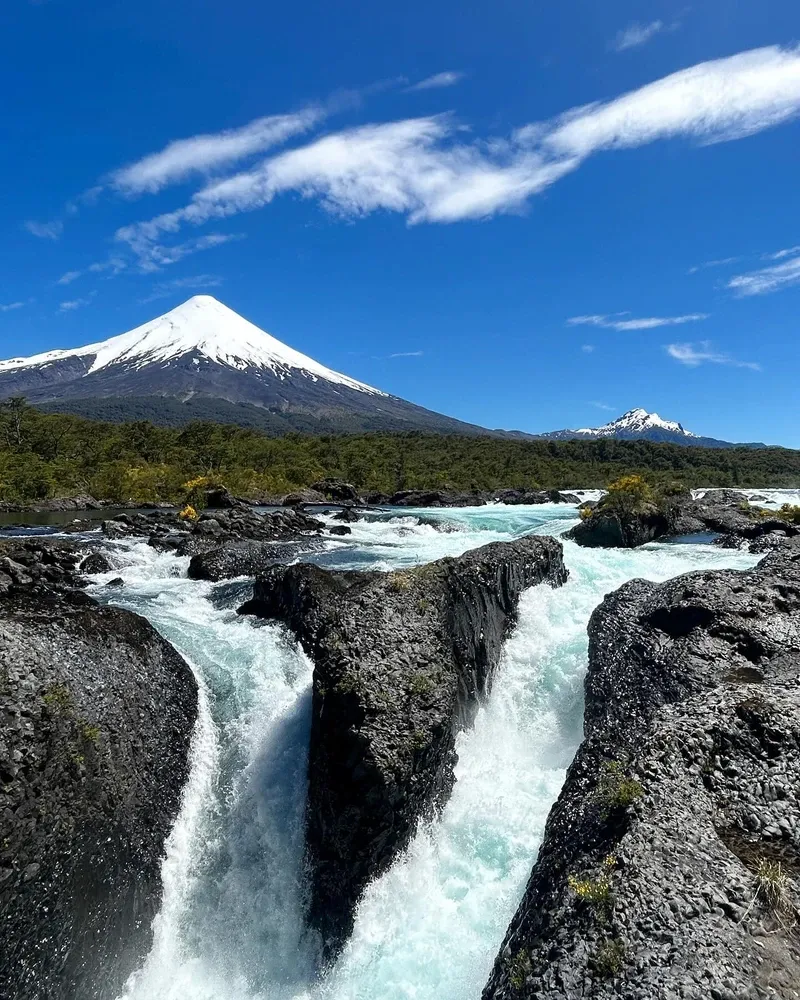
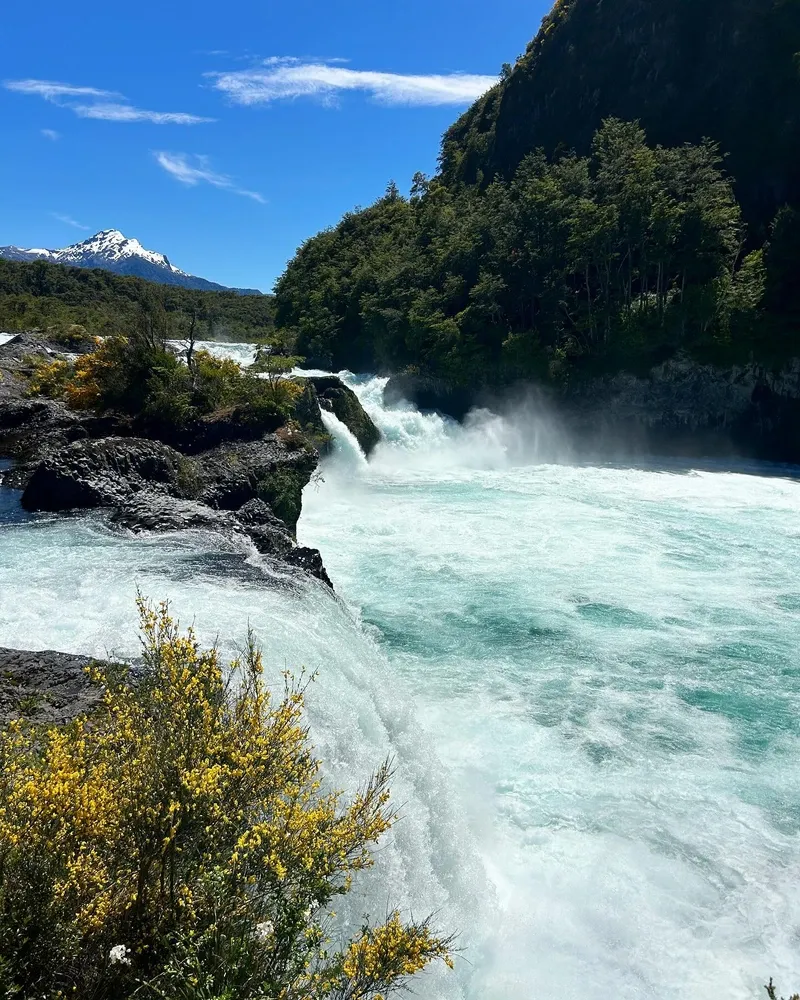
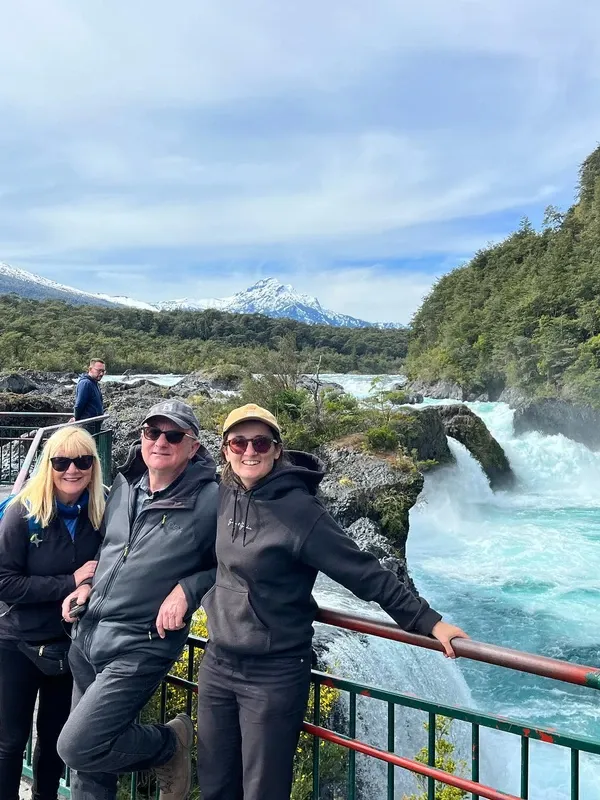
The Petrohué River surges through narrow channels of dark basaltic lava at an average rate of 270 cubic meters per second. These powerful chute-type falls feature striking turquoise water, framed perfectly by the symmetrical, snow-capped cone of the 2,652-meter Osorno Volcano in the background.
Walk the 980-meter Carilemu Trail through dense Valdivian temperate rainforest. This 45-minute loop is completely flat and features wide wooden boardwalks. The path is highly suitable for wheelchairs and strollers, providing multiple safe vantage points over the falls alongside sensory stations for visitors with visual or hearing impairments.
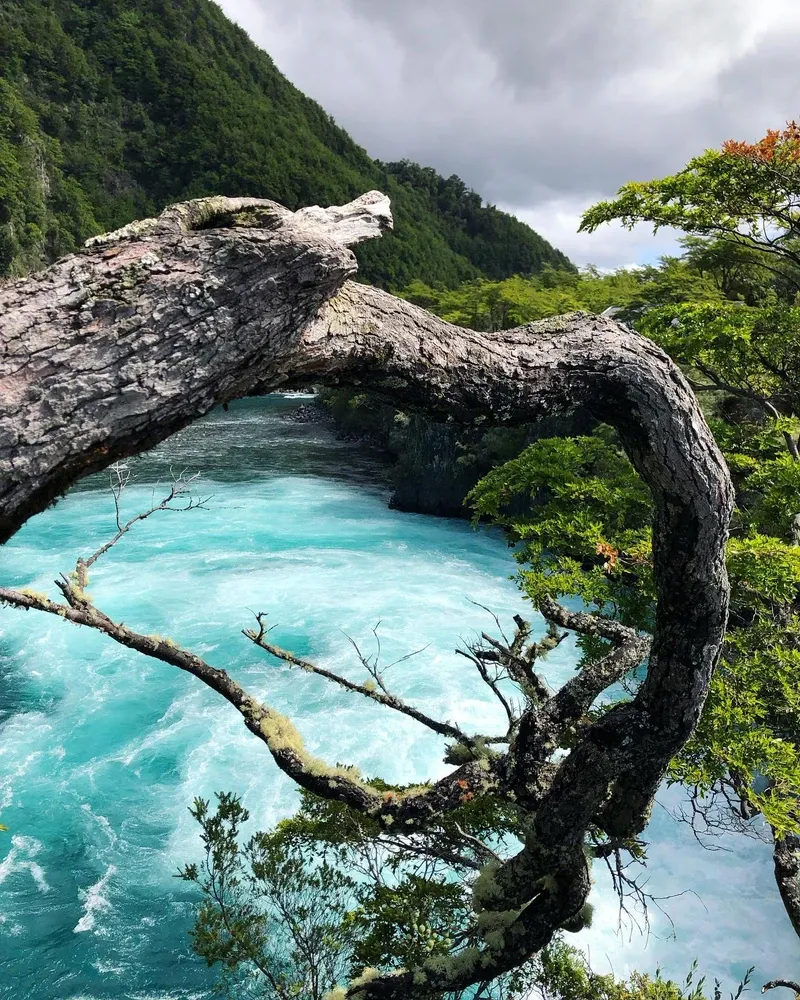
The intense rapids of the Petrohué River, located approximately 190 meters above sea level, provide a habitat for specialized local wildlife. Visitors can frequently observe native Torrent Ducks actively navigating the powerful currents, diving directly through the churning water and polished volcanic rock formations.
Eruptions from the Osorno Volcano thousands of years ago deposited the andesite lava that forms the riverbed. Abrasive sand and silt have since carved these dark rocks into smooth sculptures. Walk the downstream Los Enamorados trail to view these unique geological formations away from the main crowds.
Hand-picked tours with free cancellation and verified reviews
 Free Cancellation 6h
  Free Cancellation 5h
  Free Cancellation
  Free Cancellation 10h
  Free Cancellation 7h
  Free Cancellation 6h
  Free Cancellation 8h
  Free Cancellation 8h
 The ideal time to visit Petrohué Waterfalls is during the shoulder periods of October to December and March to April. These months provide pleasant weather and significantly smaller crowds compared to the peak summer season.
October and November are considered some of the best months to visit. The weather is pleasant, and you avoid the heavy crowds and biting flies of the peak summer season.
While December offers pleasant conditions, January and February bring peak crowds and highly active tábanos (biting flies). These mid-summer extremes make the latter half of the season less favorable.
March and April provide excellent shoulder-season conditions with pleasant weather and significantly reduced visitor numbers. The biting flies subside, allowing for comfortable walks along the 980-meter Carilemu Trail.
This period brings frequent precipitation, contributing to the region's 4,000 mm annual total. Heavy rains increase the river flow dramatically as Lake Todos los Santos rises by up to 3 meters.
The site is open 365 days a year, with seasonal variations in operating hours. During the summer months (December to March), the falls are open from 09:00 to 18:00. In the winter season (April to November), hours are slightly reduced to 09:00 to 17:30. The last entry is permitted one hour before closing. Operating hours may be reduced on Christmas and New Year's Day.
| Category | Price |
|---|---|
| Adult Foreigner | 7,000 CLP |
While tickets can be purchased at the entrance, visitors should buy them in advance through the official pasesparques.cl portal to avoid long queues during peak season. Download or print your digital park pass prior to arrival, as the mobile signal at the entrance gate is often weak.
For complete schedules and ticket prices, visit our Hours & Fees page.
Petrohué Waterfalls is situated 55.2 kilometers east of Puerto Varas within Vicente Pérez Rosales National Park. Visitors can reach the site by driving along a fully paved road, taking a local public bus, or booking a guided tour.
📍 Route 225, Vicente Pérez Rosales National Park
Local buses clearly labeled 'Petrohué' or 'Ensenada' depart from the corner of San Bernardo and Walker Martínez in Puerto Varas. These services run frequently, with departures every 20 to 30 minutes. Travelers coming from Puerto Montt must first take a short bus to Puerto Varas and transfer. You should bring Chilean Pesos in cash to pay the driver. Card machines are often unreliable in this rural area.
Driving provides a straightforward route heading east from Puerto Varas along Route 225. This fully paved road traces the southern shore of Lake Llanquihue directly to the national park. A paid parking lot is available at the visitor center. Do not leave valuables visible inside your vehicle due to reported thefts. Heavy rain can occasionally cause mudslides that block access.
Many visitors opt for a comprehensive full-day tour departing from either Puerto Varas or Puerto Montt. These guided excursions generally last six to eight hours. They routinely combine a stop at the waterfalls with visits to the Osorno Volcano and Lake Todos los Santos. Large tour groups typically arrive at the site after 10:00 AM. Independent travelers often plan their schedules to avoid these peak arrival times.
Hiring a taxi or private transfer from Puerto Varas is a highly convenient alternative for small groups. Drivers cover the 55-kilometer distance directly to the park entrance. Passengers need to negotiate and confirm the total price with the driver before departing. This option provides flexibility to visit nearby attractions like the Emerald Lake or Ensenada Village on your own schedule.
For detailed transport options and routes, visit our Directions page.
Purchase your 7,000 CLP entry ticket in advance through the official pasesparques.cl portal. You must download or print this digital pass before leaving your accommodation. Mobile signal is consistently weak at the entrance gate, making on-site downloads unreliable and causing delays during entry.
If visiting during the peak months of January and February, avoid wearing dark clothes. Large biting flies known as tábanos are highly active during this period and are attracted to dark colors and movement. Standard bug repellents are generally ineffective against them.
Credit card machines frequently fail in this rural section of the Vicente Pérez Rosales National Park. Carry enough Chilean Pesos to cover the 3,000 CLP bus fare from Puerto Varas. You will also need cash to pay the 500 CLP parking lot fee.
The region receives roughly 4,000 mm of annual precipitation. Combine this rainfall with constant mist from the 270 cubic meters per second water flow, and the wooden boardwalks become extremely slippery. Sturdy walking shoes and a rain jacket are essential year-round. Always use the provided handrails near the basaltic rocks.
Plan your visit early in the day to avoid the heaviest foot traffic. Large tour groups from Puerto Varas and cruise ship passengers typically begin arriving after 10:00 AM. An early start guarantees quieter conditions along the 980-meter Carilemu Trail and better photography opportunities.
Theft from rental cars has been reported in the visitor center parking lot. Ensure no items are left visible inside your vehicle before heading to the trails. Additionally, leave drones in your trunk, as they are strictly prohibited within the national park without professional CONAF authorization.
Known as the Emerald Lake due to its deep green water, this basin sits at an elevation of 189 meters. Visitors can take a 30-minute boat tour to view the Puntiagudo Volcano.
Located on the 2,652-meter volcano, this ski center provides panoramic views across the Lake District. Chairlifts allow visitors to access the upper glaciers and observe the surrounding landscape from higher elevations.
This settlement serves as the primary hub for traditional Chilean food, local crafts, and adventure activities like rafting. It is the most practical location to find full meals after touring the national park.
Read what travelers share about their experience visiting Petrohue Waterfalls — from practical tips to personal highlights.
The entrance fee is 7,000 CLP for adult foreigners. While you can buy tickets at the gate, purchasing them in advance through the official pasesparques.cl portal is strongly recommended. Download or print your digital park pass before arriving, as the mobile signal at the entrance gate is often weak.
During the summer season from December to March, the site is open from 09:00 to 18:00. Winter hours run from April to November, with the park operating between 09:00 and 17:30. The last entry is permitted one hour before closing time.
Local buses depart from the corner of San Bernardo and Walker Martínez in Puerto Varas every 20 to 30 minutes. The 55-kilometer ride takes about 1 hour and 20 minutes and costs 3,000 CLP. Look for buses labeled 'Petrohué' or 'Ensenada'.
No direct buses run from Puerto Montt to the falls. You need to take a 20 to 30-minute bus ride to Puerto Varas first, which costs about 1,000 CLP. From there, transfer to a local Petrohué bus to complete the trip.
Wear sturdy walking shoes and bring a waterproof rain jacket, as the 4,000 mm of annual precipitation and frequent waterfall mist can cause sudden dampness. If visiting during January or February, wear light-colored clothing to avoid attracting the large biting flies known as tábanos. Bring Chilean Pesos in cash for the 500 CLP parking fee and small purchases.
Yes, the primary viewpoints and the main trails are highly accessible. The site features well-maintained wooden boardwalks and wide ramps suitable for wheelchairs and strollers. There are also sensory stations designed specifically for visitors with visual or hearing impairments.
The shoulder months of October to December and March to April offer the best weather with significantly fewer crowds. January and February are the peak tourist months, bringing heavy crowds and highly active biting flies. Regardless of the month, arrive before 10:00 AM to avoid the large tour groups.
Swimming is strictly prohibited. The Petrohué River has an average water flow of 270 cubic meters per second, creating extreme currents and highly dangerous conditions among the basaltic lava rocks.
Browse verified tours with free cancellation and instant confirmation.
Find Tours